
Why ECG Interpretation Needs Clinical Context
ECG learning becomes safer and more useful when clinicians connect the tracing to symptoms, risk, timing, and real emergency department decisions.
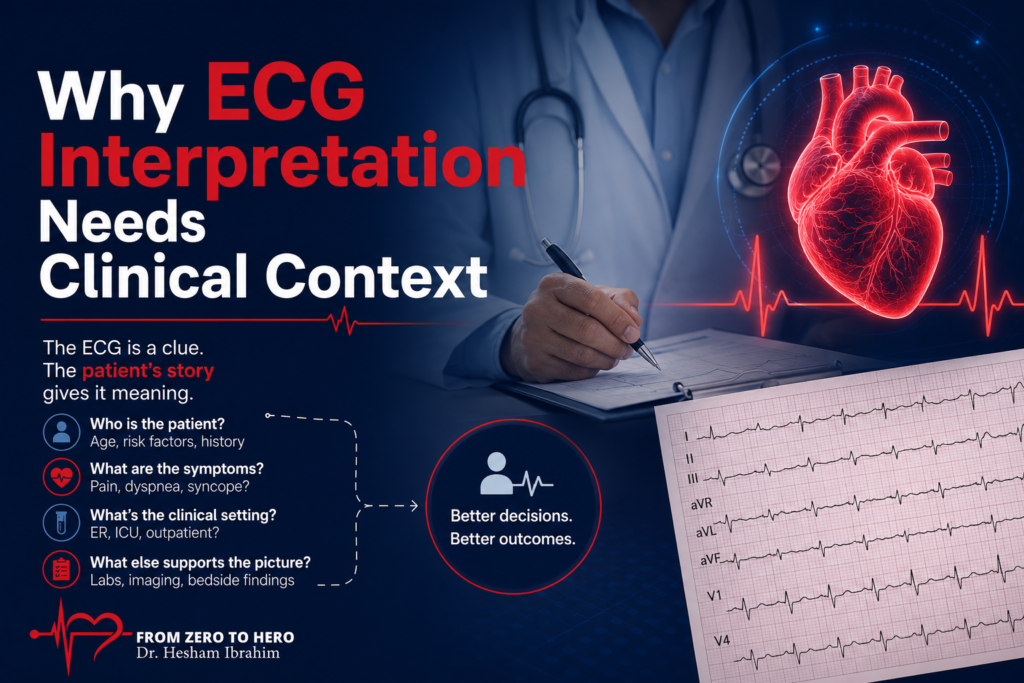
ECG interpretation is one of the most valuable skills in emergency medicine. Yet one of the most common mistakes learners make is treating the ECG as if it exists in isolation.
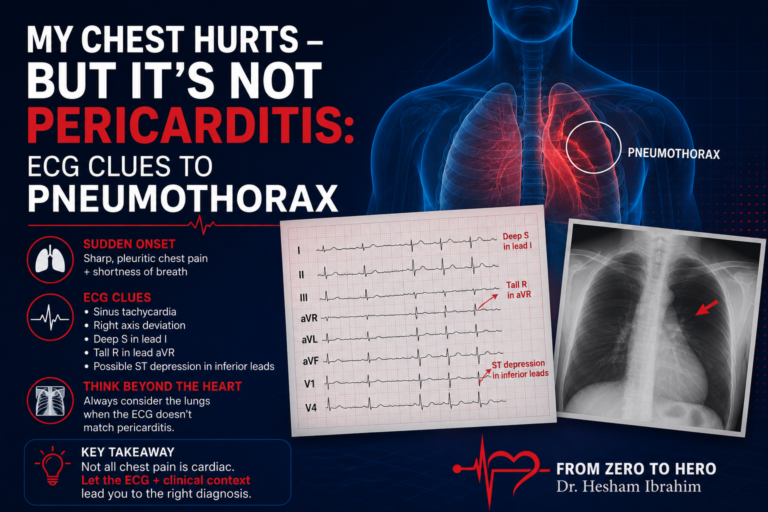
An ECG is not a diagnosis. It is one piece of clinical information that must always be interpreted alongside the patient's symptoms, history, examination findings, and overall presentation.
The ECG Is Part of the Patient Story
The same ECG can have very different meanings depending on the patient sitting in front of you.
ST-segment elevation in a young patient with pericarditis does not carry the same implication as ST-segment elevation in a patient with crushing chest pain and cardiovascular risk factors.
Likewise, T-wave inversion may represent acute ischaemia, a previous infarction, a normal variant, or several other conditions. The ECG alone cannot tell the whole story.
Clinical context transforms an ECG from a tracing into a clinical decision. The safest interpretation always combines the ECG with the patient's presentation.
Symptoms Matter
Before analysing any ECG, clinicians should first understand why the ECG was performed.
- Chest pain
- Syncope
- Palpitations
- Shortness of breath
- Collapse
- Cardiac arrest
Each clinical presentation changes how the ECG should be interpreted and which abnormalities become most significant.
Timing Changes Everything
An ECG represents a single moment in time.
Acute coronary syndrome, electrolyte disturbances, arrhythmias, and many emergency conditions evolve over minutes or hours. A completely normal ECG early in the patient's presentation does not always exclude serious pathology.
This is why repeat ECGs are frequently essential when symptoms persist or clinical suspicion remains high.
Previous ECGs Provide Valuable Clues
Comparing today's ECG with an earlier tracing can immediately answer important questions.
- Is this new?
- Has the ST deviation changed?
- Are the T-wave inversions longstanding?
- Is the bundle branch block old or new?
Without comparison, clinicians may either overreact to chronic abnormalities or miss subtle acute changes.
Never interpret today's ECG without asking whether an older ECG is available.
The Patient May Be More Important Than the Tracing
Sometimes the ECG appears reassuring while the patient clearly is not.
A patient with ongoing severe chest pain, hypotension, diaphoresis, or recurrent ventricular arrhythmias should never be falsely reassured by an ECG that appears only mildly abnormal.
Clinical deterioration should always outweigh ECG appearance when making management decisions.
ECG Interpretation Should Guide Action
The purpose of ECG interpretation is not simply to identify patterns. It is to decide what should happen next.
Every ECG interpretation should naturally lead to questions such as:
- Does this patient need urgent reperfusion?
- Should the ECG be repeated?
- Is further imaging required?
- Should cardiology be contacted?
- Can this patient be discharged safely?
Good ECG interpretation always connects the tracing to clinical management.
Learning Through Real Cases
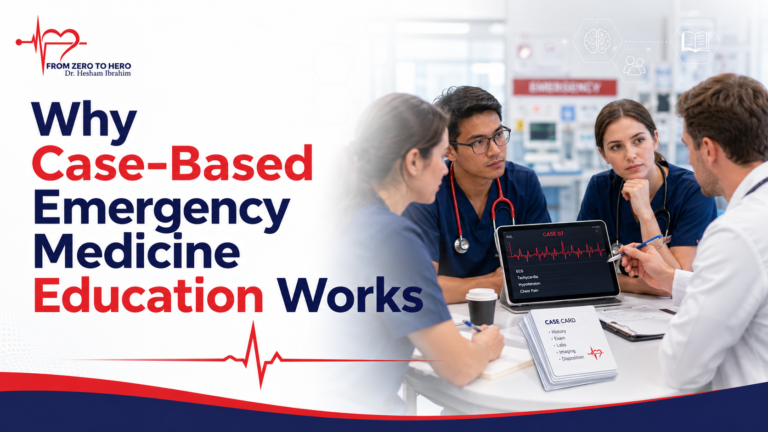
Case-based ECG education develops this habit naturally because learners are required to interpret the ECG within the full clinical scenario rather than as an isolated image.
Instead of memorising patterns, clinicians learn how to integrate symptoms, examination findings, investigations, and ECG changes into safe clinical decision-making.
Final Thought
The best ECG interpreters do not simply recognise patterns. They understand patients.
Clinical context gives every ECG its meaning. By combining the tracing with the patient's presentation, clinicians make safer decisions, avoid diagnostic errors, and provide better emergency care.
Ready To Take Your Clinical Learning Further?
Explore structured ECG and emergency medicine courses built around practical clinical knowledge, real cases, and confident decision-making.