
A Safer Mindset for ACS ECG Learning
ACS ECG learning is not only about obvious STEMI. It is about structured review, subtle signs, repeated assessment, and safer escalation thinking.
ACS ECG learning is not only about obvious STEMI. It is about structured review, subtle signs, repeated assessment, and safer escalation thinking.
Case-based learning helps emergency clinicians retain knowledge, practise judgement, and apply frameworks under pressure.
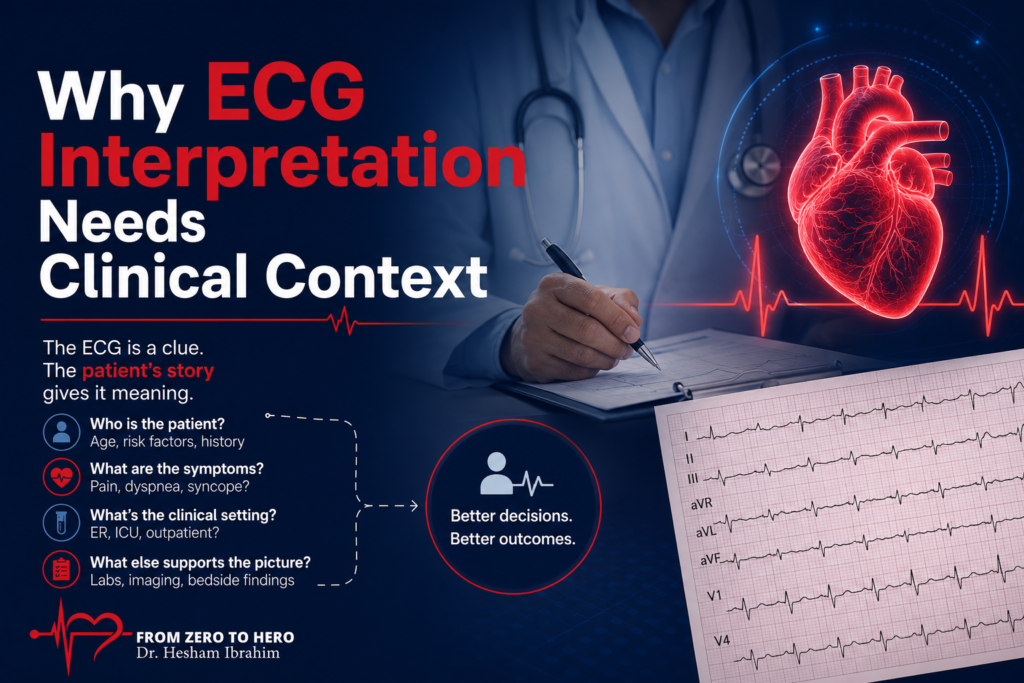
ECG learning becomes safer and more useful when clinicians connect the tracing to symptoms, risk, timing, and real emergency department decisions.
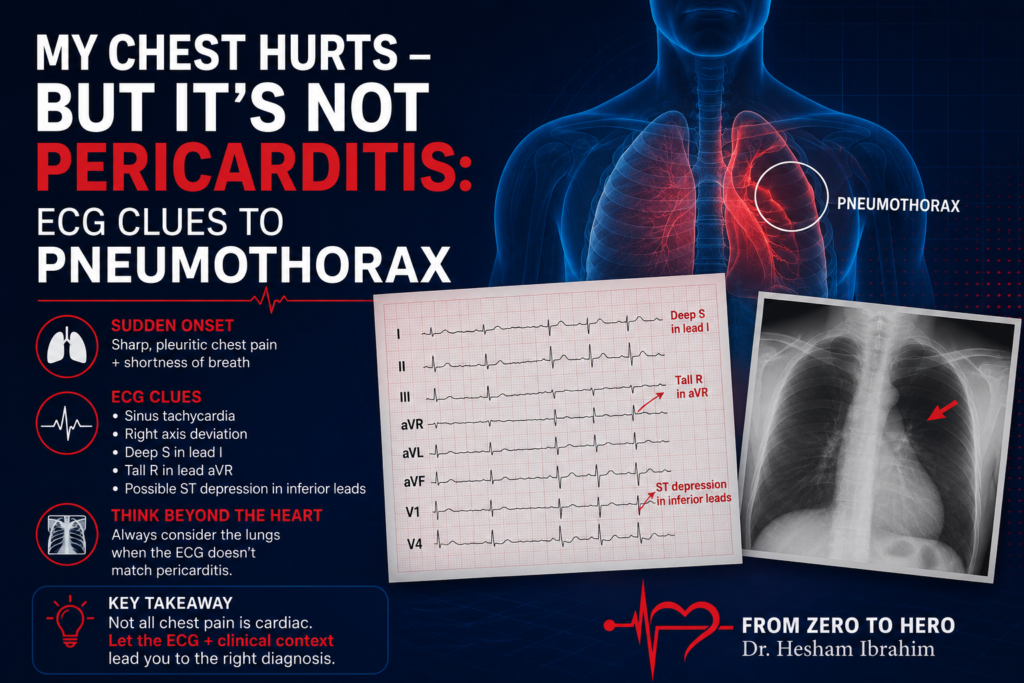
Case Presentation: A 21-year-old male presented to the Emergency Department with vague right-sided chest pain for several hours. He was normally healthy

Case Presentation (H2) A 53-year-old male presented to the Emergency Department with palpitations. His ECG showed a heart rate of 132 bpm.
Case Presentation (H2) A 63-year-old male patient presented to the Emergency Department with palpitations. The initial ECG suggested Supraventricular Tachycardia (SVT), and the patient was treated with 6 mg of Adenosine, which successfully restored sinus rhythm, as confirmed on the monitor.
Case Presentation (H2) A 46-year-old male patient with a high BMI and a history of paraplegia secondary to an old spinal cord injury was discovered on the floor by his carer in the early morning. It’s unclear how long he remained there, but it was likely overnight.
Upon assessment, the patient appea
Introduction: The Case Presentation (H2) This ECG belongs to a 19-year-old male who presented to the Emergency Department (ED) with recurrent episodes of palpitations. Notably, he reported no chest pain or breathlessness at any time during the episodes, and there were no previous ECGs available for